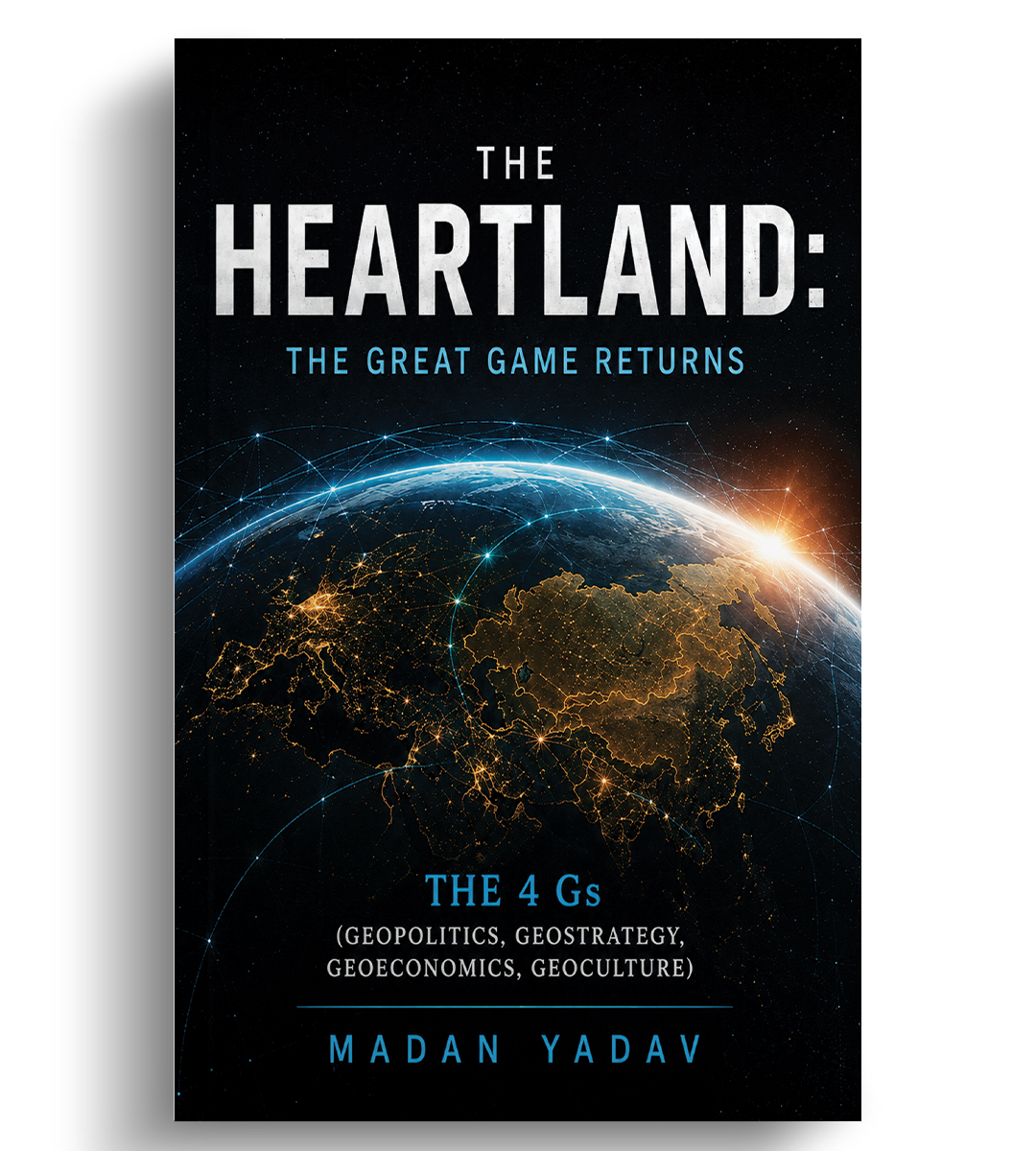
The struggle for Eurasia. The contest for power. The return of the Great Game. Where geography becomes strategy—and strategy reshapes the world.
Welcome to The Heartland
The Great Game Has Returned
The world is entering a new era of geopolitical competition. Across the vast expanse of Eurasia, powerful nations are contesting territory, energy, trade routes, strategic influence, and security. At the same time, the maritime arteries surrounding this immense landmass have become increasingly important to the global balance of power. The Heartland: The Great Game Returns examines this evolving geopolitical landscape and asks a fundamental question: Who will shape the balance of power in the 21st century? Through a strategic examination of continental powers, maritime alliances, competing interests, and global flashpoints, the book explores the forces transforming the international order.
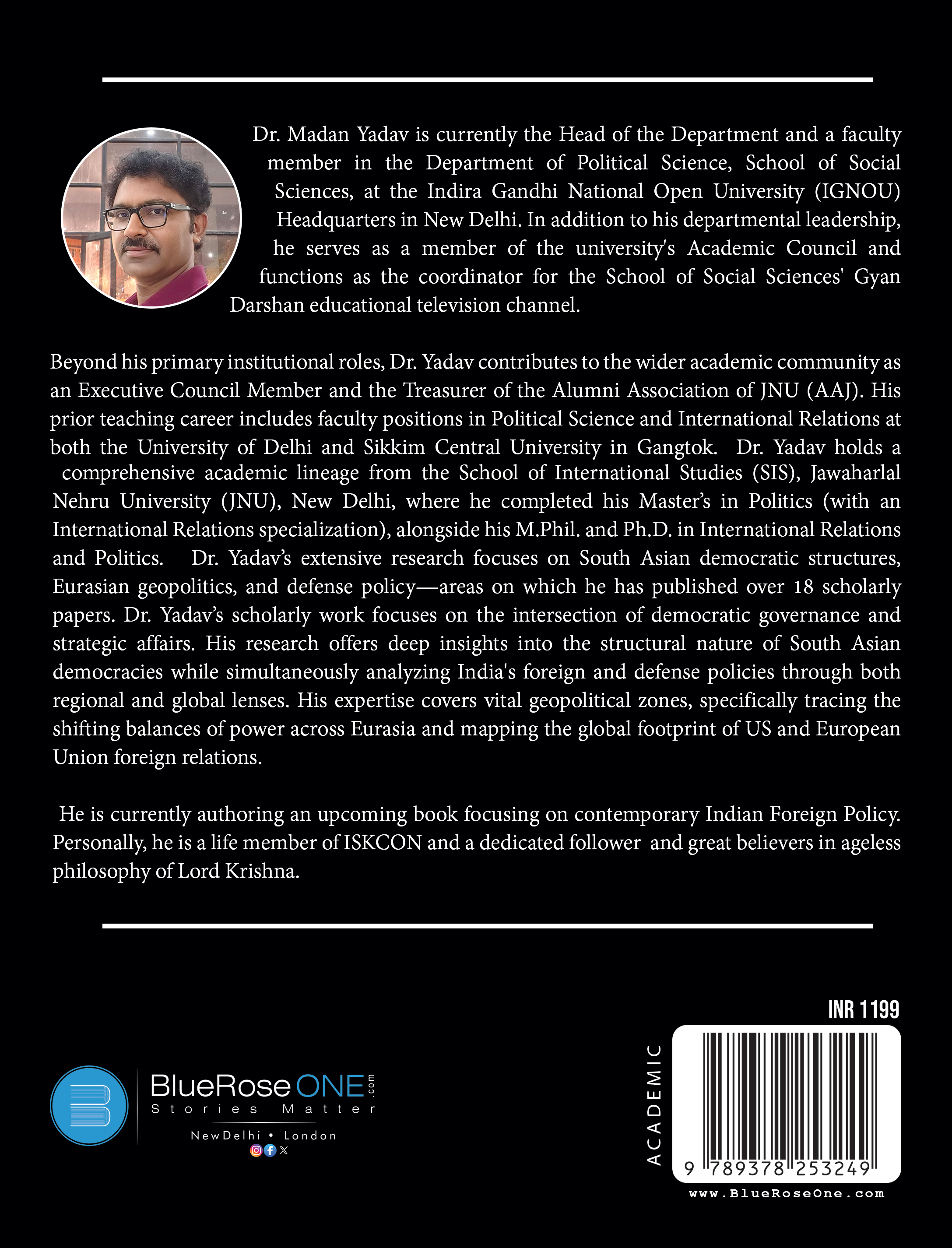
Meet Madan Yadav
A Scholar of Global Power and Geopolitics
Madan Yadav teaches Foreign Policy and International Relations to Ph.D. scholars at the university level, bringing an academic and analytical perspective to the study of global affairs. His areas of specialization include Eurasian geopolitics and the security and defence dynamics of major global powers, particularly India, China, the European Union, Russia, and the United States. His academic engagement with international relations focuses on understanding the strategic calculations, geopolitical interests, security concerns, and shifting relationships that influence the contemporary world. Through The Heartland: The Great Game Returns, Yadav brings these complex questions into a broader conversation about the future of global power.
The Heartland: The Great Game Returns
A new contest is reshaping the global order.
What happens when the world’s major powers compete simultaneously for land, resources, energy corridors, trade routes, strategic depth, and maritime access? The result is a geopolitical contest that stretches across borders and connects seemingly distant conflicts and strategic theatres. The Heartland: The Great Game Returns explores the defining geopolitical struggle of our time—a multi-front contest for influence over the Eurasian landmass and the vital maritime arteries that surround it. The book examines the renewed tension between continental land powers and Western maritime alliances, placing today’s geopolitical developments within the larger strategic framework of the Eurasian Heartland.
Page Length
271 pages
Publication date
1 September 2026
Publisher
Bluerose Publishers
Reading age
13 years and up
Why Read The Heartland?
Because today’s headlines are part of a bigger story. Geopolitical developments can often appear disconnected. A conflict here. A trade corridor there. An energy agreement somewhere else. A new alliance. A strategic partnership. A military deployment. But when these developments are viewed together, a larger picture begins to emerge. The Heartland: The Great Game Returns offers readers a framework for examining these connections and understanding how geography, resources, security, economics, and power intersect.
This book invites you to:
Look beyond individual geopolitical events
Understand the strategic importance of Eurasia
Examine the relationship between land power and maritime power
Explore the significance of energy and trade routes
Consider the security calculations of major global powers
Connect regional flashpoints to broader geopolitical competition
Reflect on how the global balance of power is changing
Who shapes the global balance of power? The Heartland: The Great Game Returns explores these questions through the geopolitical realities unfolding across today’s world.
Follow Madan Yadav’s work and stay connected with perspectives on foreign policy, international relations, Eurasian geopolitics, security, defence, and global power dynamics.